
The Buyer-Centric Method.
Most small business owners are doing the right things.
They’re working hard, serving customers well, and trying to grow responsibly.
And yet, something often feels off.
Sales feel heavier than they should.
Finding new customers feels inconsistent.
And despite effort, clarity feels just out of reach.
The Buyer-Centric Method exists to address that gap — not by asking you to do more, but by helping you see your business differently.
What is the “Buyer-Centric Method”?
At its core, the Buyer-Centric Method is a way of designing your business around how buyers actually move toward a decision — not how you wish they would, and not how business “theory” says they should.
Most small business owners build with good intentions. They focus on delivering quality, improving service, refining offers, and staying busy. Over time, layers get added — new ideas, new tools, new messaging — all in an effort to make growth happen. What often gets missed is whether all of those layers still make sense from the buyer’s point of view.
The Buyer-Centric Method asks a different question:
What is the experience of someone deciding whether to buy from you?
It looks at your business the way a buyer encounters it — step by step. How they first become aware of you. What they notice next. Where they pause. What creates confidence. What creates doubt. And what ultimately helps them decide to move forward or walk away.
This method recognizes something many owners feel but struggle to name: buyers don’t make decisions based solely on logic, price, or features. They decide based on clarity, ease, emotion, and trust — often in subtle ways that are invisible when you’re inside the business looking out.
Instead of guessing what to fix or improve, the Buyer-Centric Method gives you a clear structure for seeing where things are already working and where friction is quietly slowing everything down. It helps you identify the moments that matter most — the transitions where buyers either continue forward or disengage — and design those moments intentionally.
Just as importantly, the method shifts how you operate as an owner. It moves you out of constant reaction mode and into a design mindset. You stop chasing tactics and start making decisions that align your marketing, offers, and operations around a single, coherent buyer journey.
The result isn’t complexity. It’s simplicity.
When a business is buyer-centric, things begin to click. Messaging becomes clearer because it reflects the buyer’s reality. Sales feel easier because the path makes sense. Repeat business happens because the experience feels intentional, not accidental.
In short, the Buyer-Centric Method helps you stop pushing growth uphill — and start building a business that naturally pulls buyers forward.
How the Buyer-Centric Method Works
The Buyer-Centric Method is intentionally simple.
It isn’t a collection of tactics, tools, or disconnected ideas. It’s a clear way of thinking about your business and a clear way of designing how buyers move through it.
At its core, the method has two parts that work together.
The first part is a buyer-centric mindset. This is where the shift begins. It’s the move from seeing your business from the inside out to seeing it from the buyer’s point of view. This mindset helps you step back from day-to-day activity and understand what actually helps buyers move forward — and what quietly gets in their way. Without this shift, even good strategies tend to turn into more effort instead of more clarity.
The second part is the buyer’s journey. This is where the mindset becomes practical. In the Buyer-Centric Method, the buyer’s journey is not an abstract idea — it’s a clear path buyers follow as they Find your business, Experience it, Engage with it, and ultimately Love doing business with you. This journey already exists in every business, whether it’s been designed intentionally or not. The method simply helps you see it clearly and shape it on purpose.
Together, these two parts give you a way to work on your business with intention. The mindset helps you see differently. The journey helps you design differently. And when those two things come together, growth stops feeling forced and starts feeling natural.
What follows is a closer look at each part of the Buyer-Centric Method — starting with the mindset that makes everything else possible, and then moving into the buyer’s journey that brings it to life.
Part 1: The Buyer-Centric Mindset
The Buyer-Centric Method begins with a fundamental shift in how you think about your business.
Most small business owners naturally build from the inside out. They focus on what they sell, how they deliver it, and how hard they work to make things happen. Over time, the business becomes a reflection of the owner’s effort, experience, and intentions.
The buyer-centric mindset asks you to step outside of that perspective.
Instead of viewing your business through internal activity, you learn to see it the way a buyer does — from the outside, in motion, one decision at a time. This shift changes what matters. It moves the focus away from being busy and toward being clear.
A key part of this mindset is understanding the difference between a customer and a buyer. Customers may interact with your business in many ways, but buyers are the ones who actually make purchases. A healthy business must intentionally support the act of buying, not just marketing, serving, or staying active.
Another essential idea is recognizing that buyers don’t simply decide to buy in a single moment. They move forward when the business makes it easy, natural, and obvious to do so. When that path isn’t clear, buyers hesitate — even when they like what you offer.
This mindset also reinforces the importance of working on the business, not just in it. Being buyer-centric means intentionally designing the business instead of constantly reacting to problems as they appear. It’s a move from effort-driven growth to design-driven growth.
Once this mindset is in place, the owner is finally able to see the business clearly enough to improve it. Without it, everything else becomes tactics layered on top of confusion.
Part 2: The Buyer’s Journey (F.E.E.L.)
With the buyer-centric mindset in place, the focus shifts to the buyer’s journey itself.
In the Buyer-Centric Method, the buyer’s journey is captured through F.E.E.L. — not as a concept layered on top of the journey, but as the journey itself.
Buyers Find your business.
This is where awareness begins and first impressions are formed. Buyers notice you through marketing, referrals, online presence, or word of mouth. At this stage, they’re deciding whether you’re relevant and worth paying attention to.
They then Experience your business.
This includes everything buyers encounter as they explore further — your website, messaging, environment, processes, and how easy it is to understand what you do. Experience shapes how buyers feel long before they ever speak with you. Confusion here creates hesitation later.
Next, buyers Engage.
This is where interaction deepens. Conversations happen. Questions are asked. Trust is tested. Engagement is where buying decisions take shape, not just through logic, but through how supported and confident the buyer feels moving forward.
Finally, buyers Love the business.
This stage goes beyond the transaction. Buyers return. They refer others. They advocate for the business. This is where repeat customers and “superbuyers” are created — not by accident, but by design.
F.E.E.L. works because it reflects how buyers actually move through a business. Each stage builds on the one before it. When clarity breaks down in one stage, it shows up later as objections, price resistance, or lost momentum.
The Buyer-Centric Method helps you intentionally design each part of this journey so buyers don’t have to work hard to figure out what to do next. When the journey is clear, buying feels natural. When it’s not, even great businesses struggle.
By learning to see and shape how buyers Find you, Experience you, Engage with you, and ultimately Love doing business with you, the business stops relying on pressure or guesswork and starts operating with intention.
That’s the Buyer-Centric Method in action.
The F.E.E.L. Framework
The F.E.E.L. Framework is a simple, four-stage map of how buyers make decisions. When even one stage is unclear or confusing, sales slow down. But when all four stages work together, customers move naturally toward a confident “yes.
Here’s how it works:
1. FIND IT — Can customers discover your business easily?
If buyers can’t see you, they can’t choose you.
This stage focuses on visibility, searchability, and showing up where customers actually look.
Common problems:
No one knows you exist
Poor visibility in the community or online
Listings, website, or signage are weak or missing
2. EXPERIENCE IT — Do customers instantly understand what you offer?
Within seconds, buyers decide if your business is relevant to them.
Clear messaging and simple communication make that choice easier.
Common problems:
Confusing messaging
Too much information or jargon
Customers can’t tell what you actually do
3. ENGAGE IT— Is it easy for customers to take the next step?
People buy when the path is simple, guided, and friction-free.
This stage is all about making the “yes” obvious.
Common problems:
No clear call to action
The buying process feels complicated or unclear
Customers feel uncertain about what to do next
4. LOVE IT — Do customers return because the experience was excellent?
Repeat customers are the most profitable customers.
This stage focuses on consistency, delivery, and creating a reason to come back.
Common problems:
Buyers don’t return
Poor follow-up or customer experience
Missed opportunities for loyalty and referrals
Hi. I’m Adam.

Welcome!
Before becoming a small business owner, I spent years as a bank executive. In banking, strategy isn’t optional. Regulators require clear, intentional strategic plans because they know something important: businesses that operate with clarity and direction are more stable, more profitable, and more resilient over time.
Most small businesses don’t have that kind of external pressure. No one is requiring you to step back, think strategically, or design how your business grows. You’re busy serving customers, doing the work, and keeping things running. And there’s always something more urgent than working on the business instead of in it.
But here’s what I’ve learned—from banking, entrepreneurship, and working with countless small business owners: how your business supports the buying decision matters more than almost anything else. When buying is hard or unclear, growth stalls. When buying is simple and natural, sales follow.
That’s why Buyer-Centric Business exists. This is a place for small business owners who don’t want to become marketers or salespeople—but who do want a business that attracts buyers, makes buying easier, and increases profits over time.
Welcome to Buyer-Centric Business. I’m glad you’re here, and I look forward to helping you bring clarity and direction to your business - by building it around the buyer.
-Adam Witmer-
WORK WITH ADAM
Free Courses
Our courses are coming soon. Our “basics” series will be free, and included in our free membership. Additional courses will focus on specific business strategies.
Coming Soon!
Free Membership
Join our community of like-minded business owners and entrepreneurs who are working to strategically grow our businesses. Did we mention this membership is free?
My Books
I’m the author of the book The Buyer-Centric Small Business: A simple roadmap for more sales, faster growth, and repeat customers. Available in early 2025.
Master the boring stuff.
Business Owner Memberships.
FREE MEMBERSHIP! Enroll in our free Starter Membership and join other like-minded small business owners and entrepreneurs who are learning to work on, not it, their business.
When you become a member of the Business Strategy School, you can access free resources like:
Mini Courses
Marketing Guides
Business Strategy Shorts
Ebooks
Community

Join us as we learn to work on, not in, our businesses.
Our free, Starter membership is the best way to get going with the Business Strategy School. Membership includes strategy shorts, marketing tips and tricks, free ebooks on business strategy, free mini-courses, and access to our community.
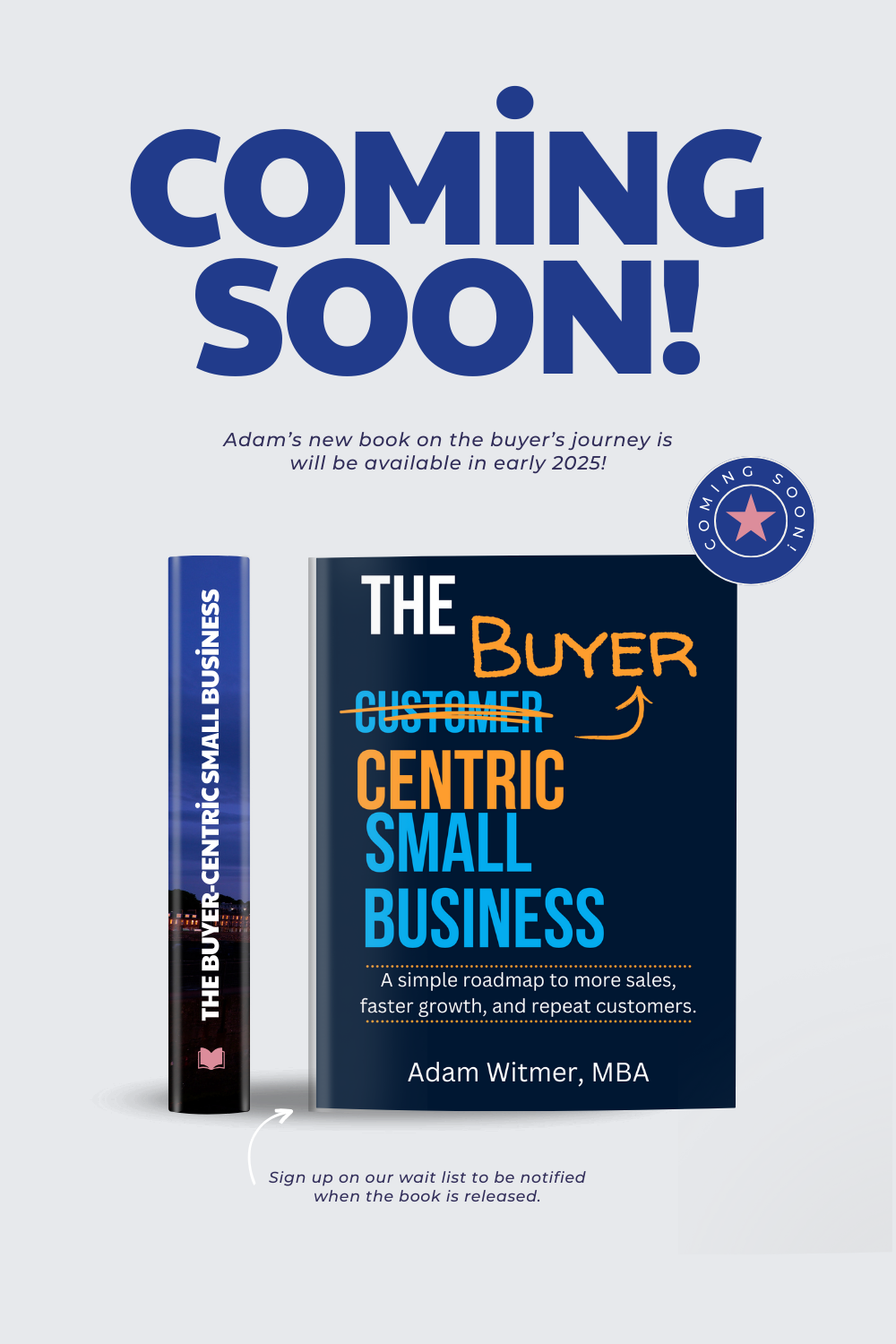
Coming in 2026:
We Literally Wrote the Book on Buyer-Centric Business
The Buyer-Centric Small Business offers a framework for small business owners to shift their focus back on the buyer so they can get unstuck and grow their business into the profit-making machine they always dreamed it could be. Author Adam Witmer explores what it looks like to have a company that is focused on one thing: the needs of the buyer. This is done by understanding how a buyer experiences our small business and then by developing a clear path - the buyer journey map - to help buyers seamlessly move from one stage of their purchasing journey to the next. Being a consultant and entrepreneur himself, Adam shares real-life examples, provides motivation to focus on the buyer, and leaves readers with practical applications on how to create a buyer-centric small business.
The Podcast.
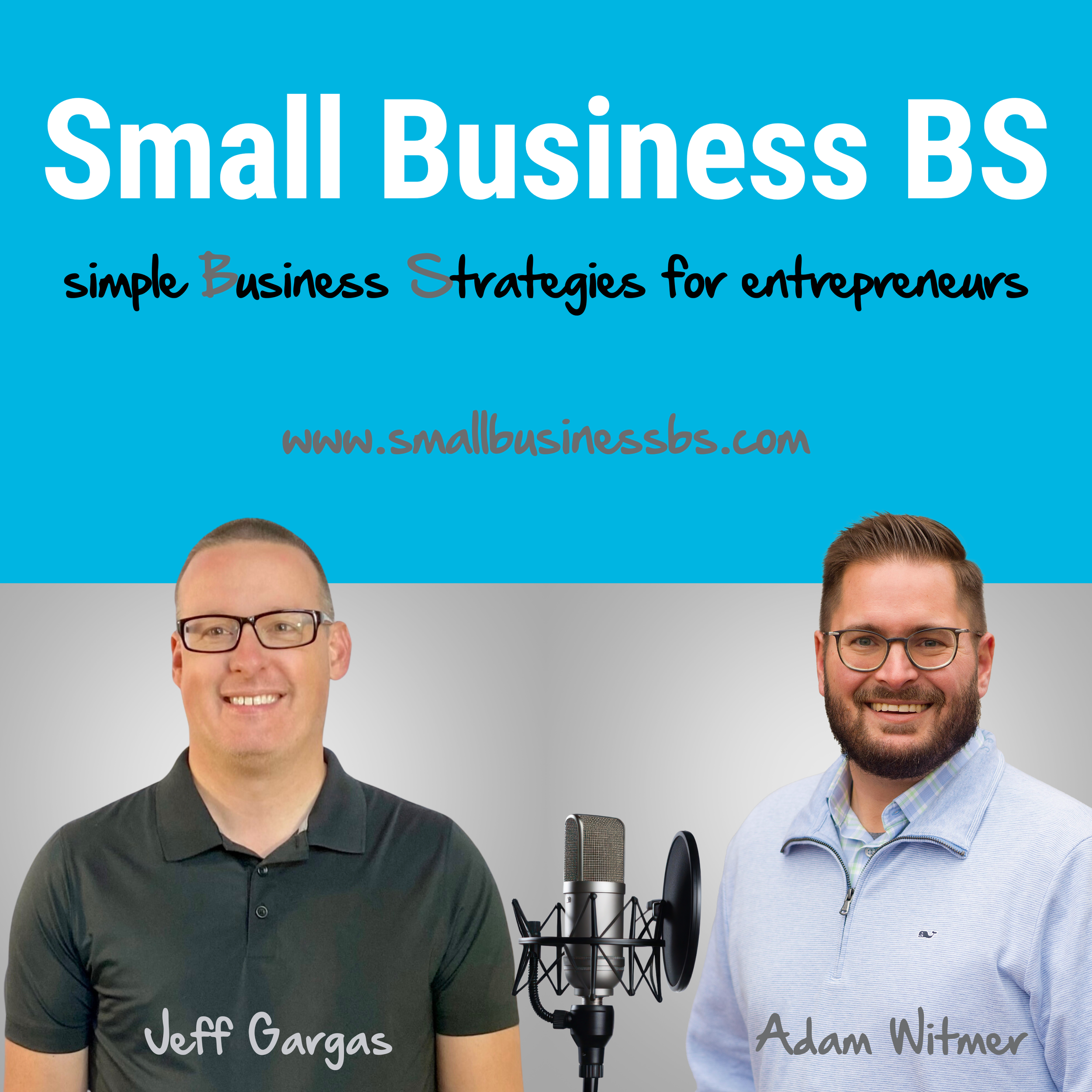
NEW IN 2025: Adam and fellow entrepreneur Jeff Gargas, discuss anything and everything related to small businesses. From marketing and sales to websites and business models, they bring a fun and relaxed approach to the sometimes intimidating topic of business.
Grow your business.
Free Membership.
Master the boring stuff by becoming a free member of the Business Strategy School. The business strategy school is designed for busy entrepreneurs who need help working on, not in their business. Get marketing tips, simple strategies, and small business best practices as a free member of the Business Strategy School.
Click below to join us today!